
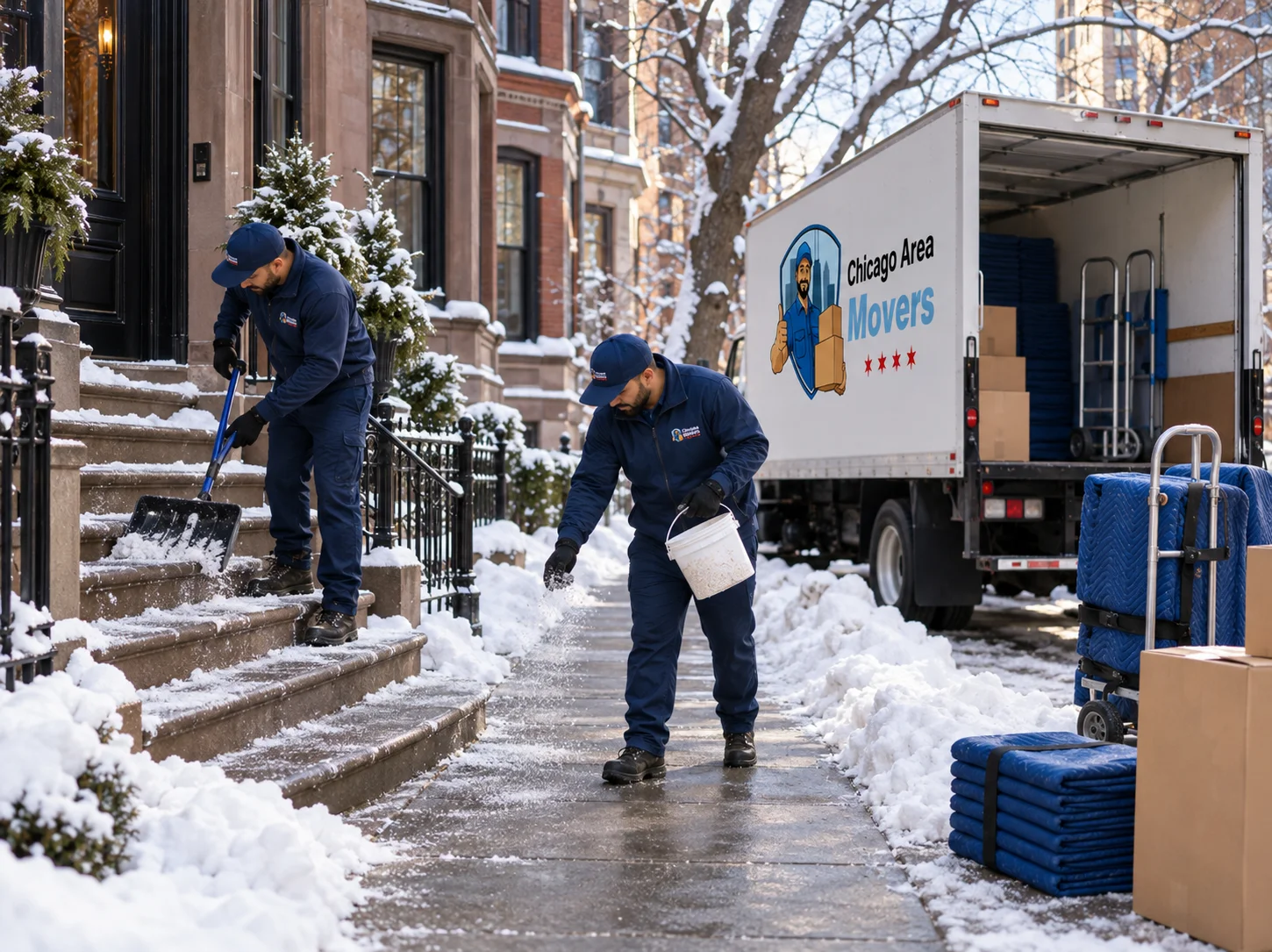
Why Chicago Winters Make Moving Harder
Chicago's winter conditions can change within a single day. January is usually the coldest month, with average highs around 32°F, lows around 19°F, and about 11 inches of snow. February is a little milder but still brings plenty of snow. Lake Michigan also influences local winter weather and can enhance snowfall under certain wind conditions.
Those conditions can affect the whole move. Access becomes less predictable, loading may take longer, and the cold adds strain for everyone working outside.
Chicago winter moving brings another practical issue: the main route may be clear while the final residential block remains difficult to access. Check the last stretch of road, the driveway or alley, the building entrance, and the route between the entrance and the truck. Those details often determine how smoothly the day runs.
Choose the Date and Build Flexibility into the Schedule
When you plan a Chicago winter moving, look beyond the long-range forecast. Weather conditions can change close to the date, so confirm the forecast, road conditions, and building access as the move approaches. Give yourself room to adjust if snow, freezing rain, strong wind, or unsafe access affects the plan.
A flexible arrival window helps when a crew needs extra time to clear a path or when traffic moves more slowly. Leave space between loading, travel, elevator reservations, and unloading. A tight sequence can turn a small delay into a problem at the destination.
Ask the moving company about its weather policy before you book. Find out how the team handles hazardous conditions, how much notice it needs to reschedule, and whether your building has a deadline for move-ins. If you are still comparing dates, the best time to move in Chicago guide can help you weigh your options before the crew arrives.
A weekday or mid-month date may give you more flexibility than a weekend at the end of the month. Your lease, work schedule, school calendar, and building rules still matter, so choose the date that gives you a realistic preparation window.
Prepare Both Properties Before the Crew Arrives
Walk through the origin and destination several days before the move. Look at the full route a person will take while carrying an item, including the sidewalk, steps, hallway, elevator, and room where the item will end up.
At the origin, clear snow and inspect the surface underneath it. Ice can remain hidden beneath a thin layer of snow or slush, particularly on shaded steps and walkways. Move outdoor objects that could narrow the path, confirm that exterior lights work, and keep traction material available where it is appropriate.
At the destination, make sure the heat is working before unloading begins. Clear the entrance and walkway, reserve the elevator or loading dock, and confirm the building's permitted move-in hours. If a building manager requires a certificate of insurance, parking reservation, or specific floor protection, arrange it before moving day.
Protect the interior path with mats or floor coverings, as snow, salt, and meltwater can spread quickly when several people make repeated trips through the same entrance. Keep towels and absorbent materials nearby so a wet area can be addressed before it becomes a slipping hazard.
The truck's position matters as well. A snowbank, parked vehicle, narrow alley, or uncleared side street may force the crew to carry items farther than expected. If you want help coordinating the larger logistics of loading, transport, and unloading, our Chicago full-service movers can handle more of the process.
Protect the People Doing the Work
Cold weather becomes more demanding when people are lifting, walking on uneven surfaces, and moving for several hours. Cold weather is harder on people who are lifting and moving outside for hours. Staying dry, taking breaks, and watching for signs of fatigue can help keep the move safe.
Wear loose layers that keep you warm without restricting movement. A moisture-wicking inner layer, an insulating middle layer, and a wind- and water-resistant outer layer can help you stay comfortable during repeated trips outside. Waterproof boots with good traction, insulated gloves, and a dry change of clothes are useful when snow reaches the loading path.
Plan regular warm-up breaks. Keep warm drinks and water available, and pay attention to signs that someone is becoming unusually tired or unable to coordinate their movements. A buddy system helps people notice changes that may be difficult to recognize in themselves.
Give everyone permission to slow down on icy surfaces. One careful trip protects the people involved and the items they are carrying. Winter moving rewards steady pacing, clear communication, and a well-prepared route.
If you are moving a business, winter access can affect staff, equipment, and the day's schedule. Our office movers in Chicago can help you plan around those requirements.
Protect Furniture, Electronics, and Sensitive Belongings
Snow and moisture are the first concerns for most household items. Keep boxes and furniture covered while they are outside, and avoid placing anything directly on wet pavement. Use sturdy packaging for fragile pieces, label delicate boxes, and keep important documents, medication, and essential electronics easy to access.
Temperature changes deserve attention as well. Electronics often come with operating and storage ranges because cold conditions can affect batteries and device performance. Apple, for example, advises users to avoid dramatic changes in temperature or humidity and notes that very cold conditions can temporarily affect an iPhone or iPad.
Pack electronics securely and keep them dry. Follow the manufacturer's instructions before operating or charging a device that has spent time in very cold conditions. And allow sensitive items to adjust to the indoor environment before use when the instructions call for it.
Wood furniture, artwork, musical instruments, and other delicate pieces also benefit from protection against moisture and sudden environmental changes. Tell the moving team about items that need special handling so the equipment and packing approach can match the item.
If your move includes heavy machinery or specialized equipment, discuss the access and loading requirements early with our heavy-equipment moving team.
Plan for Chicago Roads, Parking, and Truck Access
Chicago's winter parking rules can affect your moving day. From December 1 through April 1, overnight parking is banned on certain main streets from 3 a.m. to 7 a.m., even without snow. Other streets may restrict parking after two inches of snow, so check the signs before the truck arrives.
Confirm the truck's loading spot at each address before moving day. Ask whether a moving-van parking or right-of-way permit is needed. A legal loading space gives the crew a safer working area and reduces the distance that furniture must travel through snow or slush.
Winter roads can change quickly, especially near bridges, shaded areas, and active snowplows. Extra travel time, plenty of room around plows, and a speed suited to the conditions can make the trip safer. This matters even more when the route crosses several neighborhoods or leaves the city.
Chicago's snow-clearing priorities can affect the final blocks of a trip. Main routes receive attention before many side streets, so check the entrance, alley, driveway, or loading area at the destination before the truck leaves.
A Practical Moving-Day Plan
Start the morning by checking the latest forecast and road conditions. Confirm the truck's parking location, the building's access window, and the condition of the path from the entrance to the curb.
Before loading, place floor protection, clear snow and ice, and gather warm clothing, water, snacks, dry socks, and cleaning supplies. Keep fragile items covered and separate anything you plan to transport personally.
During the move, communicate when a surface becomes slippery or an item needs a different route. Keep doors open only as long as necessary so the home does not lose heat. Allow extra time for careful carrying, vehicle movement, and warming breaks.
At the destination, inspect the path again before unloading. Keep the home heated, place wet items where they can dry safely, and follow manufacturer guidance before turning on cold electronics.
If a sudden change leaves you needing help on short notice, our emergency movers in Chicago can help you discuss the available options.